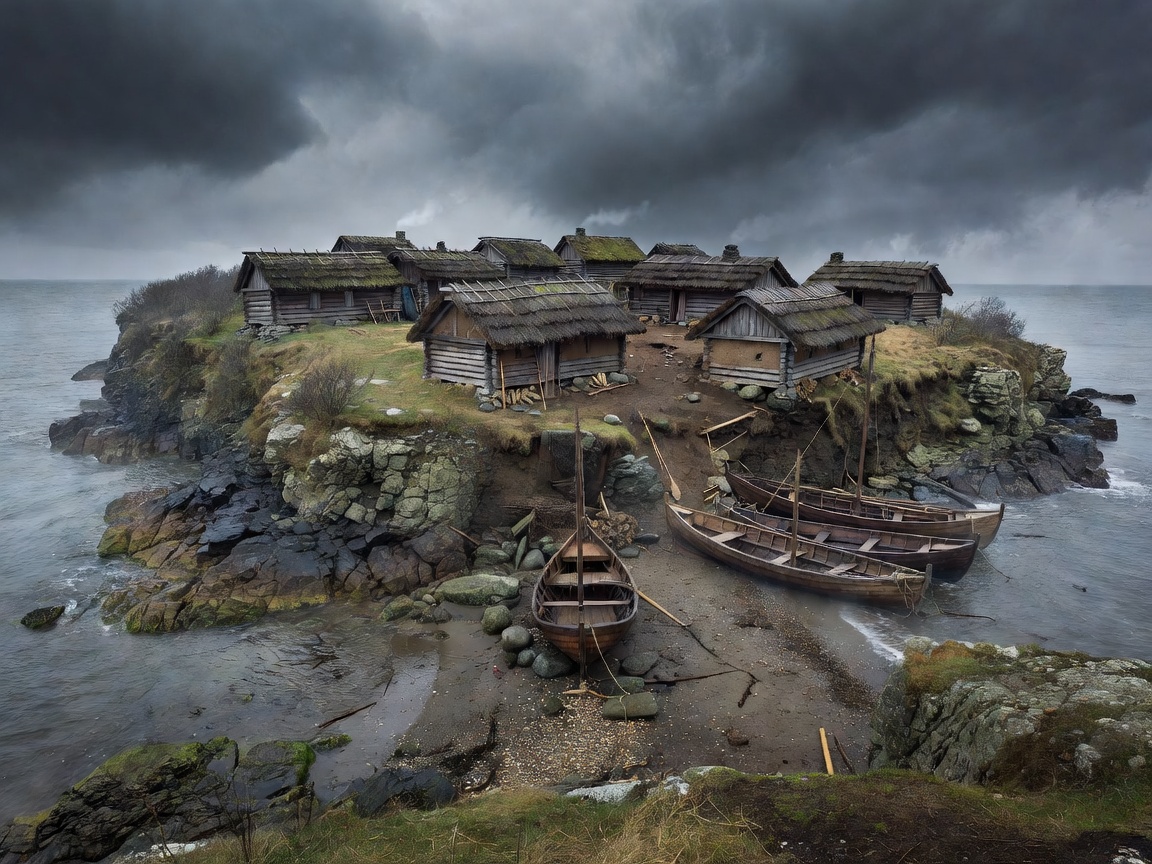
What makes a coastal village?
For this guide, a small coastal village is a settlement whose layout and daily life have a close relationship with the shore. That relationship may come from fishing, ferry connections, seasonal work, small-scale trade or simply the location of homes and paths beside the sea. The label is descriptive, not a legal category. Population thresholds and official definitions vary between countries.
Look for practical clues: a compact street pattern, a landing place or harbour, buildings oriented toward sheltered water, and routes linking homes to the coast. Not every place has all of these. Some villages have a strong waterfront; others sit back from exposed shores, behind trees or dunes.
Harbour, island and mainland patterns
Harbour villages usually cluster around sheltered water and working access. The harbour can be a small basin, a set of piers or a simple landing area. Its present use may differ from its historic role. Treat working quays as workplaces, not public promenades.
Island settlements are shaped by limited land, exposure and their connections to the mainland. Their services and transport options can vary by season. Check current local information rather than assuming that a route operates at a particular frequency.
Mainland coastal villages may stretch along a road, gather around an inlet or occupy a small rise above a low shore. Inland links often matter as much as the seafront. A village can serve farms, forests or nearby towns as well as maritime activity.
Regional differences around the sea
The Baltic Sea region includes Estonia, Latvia and Lithuania, but also Finland, Sweden, Denmark, Germany, Poland and other neighbouring coasts. Geography and culture do not stop at national borders, yet languages, land-use histories and local institutions remain distinct.
Northern coastlines, including parts of Finland and Sweden, contain extensive archipelagos and rocky shores. In Estonia, island and mainland settlements meet varied low coasts and wooded landscapes. Latvia and Lithuania include sandy stretches, river mouths and changing coastal terrain. Southern shores in Poland and Germany have their own ports, resort histories and village patterns. These are broad tendencies, not descriptions of every place.
Scale, services and arrival
Small scale can mean short distances within a settlement, not easy access to everything. Shops, fuel, healthcare, public transport and food businesses may be limited, seasonal or located elsewhere. Confirm the services you need with current local sources.
- Check the official local transport operator for current routes and service notices.
- Confirm whether paths cross private land or working areas.
- Plan for limited evening services and mobile coverage where relevant.
- Carry essentials if you are travelling beyond a service centre.
Good for
This guide is useful for travellers deciding between an island stop, harbour settlement or mainland village; researchers comparing settlement forms; and walkers who want to understand how a route relates to local life.
What to know
Do not infer a village’s identity from architecture alone. Shared building forms can have different histories. Ask permission before photographing residents or private property. Local signs and access instructions take precedence over general guidebook advice.
Build a shortlist by coast type, access and available services—not by an assumed ranking. For cultural context, see culture and local traditions. To read the built landscape, open architecture and harbours.